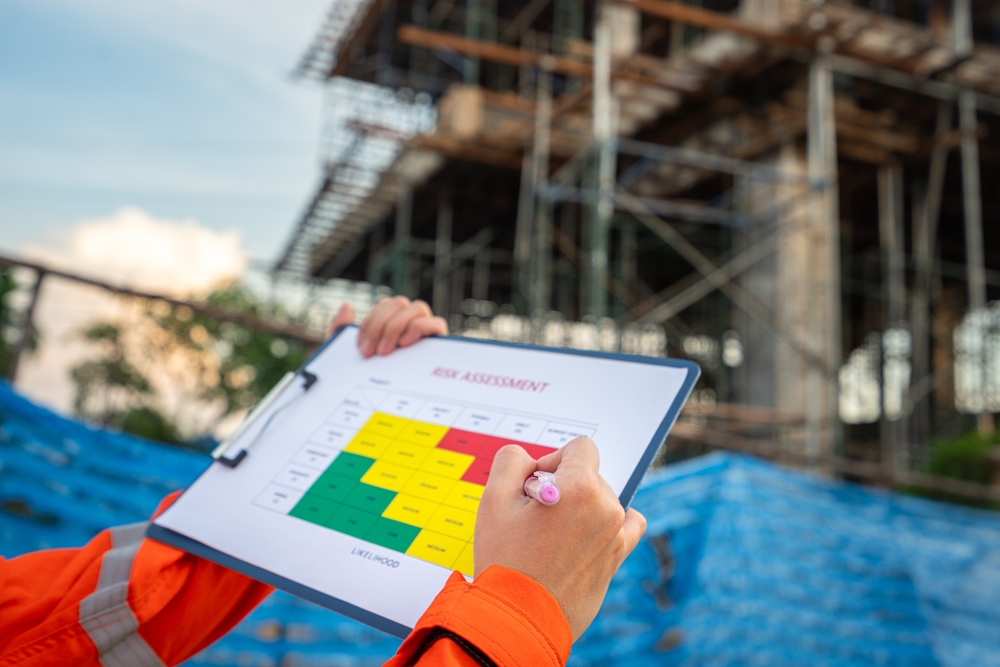
Construction sites are constantly changing environments. As work progresses, new hazards can emerge, equipment and materials are moved, different trades begin working alongside one another and weather conditions can affect the safety of ongoing activities. A risk assessment completed at the start of a project may not account for every situation that develops during the construction process. Dynamic risk assessments help workers and supervisors identify these changing conditions and take appropriate action before an incident occurs.
For construction employers, site managers and safety professionals, understanding how dynamic risk assessments work is an important part of maintaining effective health and safety controls.
A dynamic risk assessment is an ongoing process of identifying hazards, evaluating potential risks and deciding what control measures are needed as working conditions change. Unlike a formal risk assessment prepared in advance, it takes account of the circumstances workers encounter while carrying out their tasks.
It does not replace documented risk assessments, method statements or formal safety procedures. Instead, it provides an additional layer of practical risk management, allowing workers to respond to unexpected hazards and changes that could affect their safety or the safety of others.
For example, a construction team may have planned to move materials through a designated access route. If another contractor blocks that route with equipment, the original plan may no longer be safe. A dynamic assessment allows the team to recognise the obstruction, consider alternative arrangements and ensure that the work does not continue under unsafe conditions.
Construction projects involve multiple activities that can change throughout the working day. Ground conditions may deteriorate following heavy rain, machinery may need to operate in a different area, or deliveries may create unexpected congestion.
Some hazards are difficult to anticipate during initial project planning. Others arise because work is being carried out in close proximity to other activities.
Dynamic risk assessments help address these situations by encouraging workers to stop and reconsider the risks when circumstances change. This can be particularly important during:
The ability to recognise a changing hazard and respond appropriately can prevent a minor site issue from developing into a serious incident.
Although procedures vary between organisations and types of construction work, the process generally involves several important stages.
Workers should remain alert to anything that could cause harm. This may include damaged equipment, unstable materials, poor visibility, unexpected vehicle movements, exposed services or unsafe access arrangements.
Identifying hazards requires an understanding of the task being undertaken and the surrounding working environment.
The assessment should consider everyone who may be affected by the hazard. This includes the workers directly involved in the activity, other trades operating nearby, delivery personnel, visitors and members of the public.
Workers and supervisors need to consider how likely an incident is and how serious its consequences could be. A hazard that presents a low risk under one set of conditions may become significantly more dangerous when circumstances change.
For example, operating machinery on firm, level ground presents different risks from operating it on wet or unstable ground.
Once a risk has been identified, suitable measures should be introduced before work continues. Depending on the situation, this could involve isolating an area, changing the work sequence, using different equipment, improving access arrangements or bringing in specialist assistance.
Control measures should follow the principles of the hierarchy of controls, prioritising the elimination of hazards where reasonably practicable rather than relying solely on personal protective equipment.
A dynamic risk assessment is not a one-off exercise. Conditions should continue to be monitored, particularly when the task changes, new workers arrive or additional hazards become apparent.
If the original control measures are no longer effective, the assessment must be reconsidered.
Dynamic risk assessments are most effective when workers feel able to raise concerns and stop an activity that they believe is unsafe.
A worker may notice a hazard that has not been identified by a supervisor or included in the original method statement. If there is no clear procedure for reporting the concern, the issue may go unaddressed.
Construction employers should establish clear arrangements for workers to communicate hazards, seek advice and escalate safety concerns. Supervisors should respond promptly and ensure that work only resumes when appropriate controls are in place.
This approach also depends on good communication between contractors. Changes affecting one team may create additional risks for another, making coordination essential.
Workers need sufficient knowledge and practical training to recognise hazards and understand when working conditions require a reassessment.
Training should reflect the nature of the work being undertaken. A plant operator, electrician, scaffolder and general construction operative may encounter very different risks and require different levels of task-specific knowledge.
Supervisors also need to understand how dynamic assessments relate to formal risk assessments, safe systems of work and method statements. They should be able to recognise when a situation requires a more detailed review or specialist advice rather than an informal adjustment.
Regular toolbox talks can reinforce this knowledge by discussing real site scenarios and encouraging workers to consider how they would respond to changing conditions.
Not every dynamic assessment requires a lengthy written report, particularly when an immediate response is needed to address an obvious hazard. However, significant changes to working arrangements, control measures or identified risks should be communicated and documented in accordance with the organisation's safety management procedures.
Accurate records can help demonstrate that concerns were addressed and that appropriate decisions were made. They also provide useful information for future planning, site inspections and safety reviews.
Where changes affect an approved method statement or formal risk assessment, the relevant documents should be reviewed and updated as necessary before work proceeds.
Dynamic risk assessment should form part of everyday site management rather than being treated as an additional administrative exercise.
Employers can support the process by making sure workers understand their responsibilities, providing accessible reporting procedures and ensuring supervisors are available to deal with emerging hazards. Pre-start briefings, regular site inspections and effective coordination between contractors can also help identify problems before work begins.
The objective is to create a working environment where people recognise that safety conditions can change and that decisions must reflect the actual situation on site.
For construction professionals, the ability to assess changing risks is an important practical skill. It supports safer working methods, improves communication and helps prevent incidents across projects of every size.
Health and safety expertise plays an important role across the construction industry, creating opportunities for professionals interested in site supervision, risk management, occupational safety and project management. Developing knowledge of risk assessment, incident prevention and construction safety procedures can strengthen professional competence and support career progression.
ConstructionJobsExpo.ie provides a platform for people interested in construction and engineering careers to explore industry opportunities, connect with employers and learn more about the skills required across the sector.